
A professional yarn manufacturer serves as the foundational link in the textile supply chain, converting raw fibers into high-quality spun yarns. These manufacturers employ a variety of spinning technologies—ranging from ring spinning to air-jet and compact spinning—to produce yarns that meet specific requirements for strength, texture, and functionality for weaving and knitting industries.
For procurement officers and garment designers, selecting the right yarn manufacturer is critical because the yarn's properties directly determine the final fabric's durability, drape, and feel. In an era of sustainable fashion and technical apparel, the industry is shifting toward differentiated fibers, including recycled polyester, modal, and antistatic blends, to meet evolving safety and environmental standards.
This guide provides a technical analysis of yarn manufacturing processes, key selection criteria for sourcing high-performance materials, and an evaluation of how advanced spinning capabilities impact the quality of final textile products, helping you make an informed procurement decision.

1Core Processes of Yarn Production

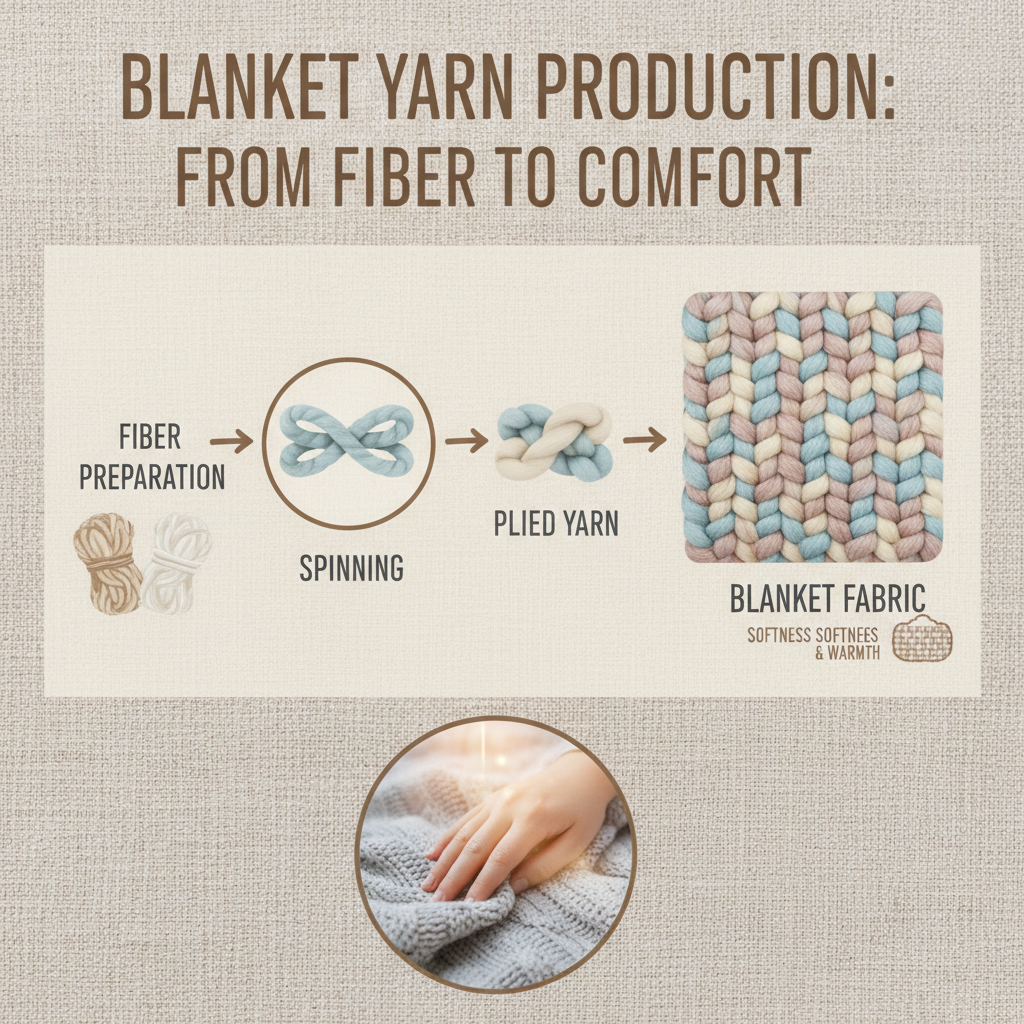
Yarn manufacturing begins with the preparation of raw materials, where fibers such as cotton, polyester, or bamboo are cleaned and carded to align the fibers. The spinning process then twists these fibers together to create a continuous strand. Depending on the desired end-use, manufacturers may use ring spinning for strength or air-jet spinning for a smoother, more uniform appearance.
Advanced facilities integrate compact spinning technology, which reduces the hairiness of the yarn. By condensing the fiber strand before twisting, the result is a denser, stronger yarn that improves the quality of the subsequent weaving or knitting process, especially for high-end apparel.
The final stages involve winding the yarn onto bobbins or cones, where tension is carefully controlled to ensure that the yarn does not stretch or warp. This consistency is essential for industrial looms that operate at extreme speeds, where any variation in yarn tension can lead to fabric defects.
2Technical Specifications and Quality Markers
Quality in yarn manufacturing is measured by several critical parameters. Yarn count, which indicates the fineness or thickness of the yarn, is the primary specification. For instance, a higher count denotes a finer yarn. Additionally, twist per inch (TPI) determines the yarn's strength and how it will react during dyeing and finishing.
Consistency in fiber composition is another hallmark of a high-tier manufacturer. Whether using a 65% Polyester and 33% Cotton blend or specialized antistatic fibers, the distribution of these materials must be uniform across the entire batch to prevent "streaking" or uneven coloring in the final fabric.
Certification standards such as Oeko-Tex Standard 100 or GOTS organic certification provide objective proof that the yarn is free from harmful substances and produced under ethical environmental conditions, which is now a mandatory requirement for many global brands.
3Applications Across Industrial Textiles
Yarns are not one-size-fits-all; they are engineered for specific end-uses. For example, workwear and uniform fabrics require high-tenacity yarns that resist abrasion and maintain structural integrity under harsh conditions. In contrast, home textiles like bedding sets prioritize softness and breathability, often utilizing modal or bamboo blends.
Specialized applications, such as laboratory uniforms, require the integration of antistatic fibers. By weaving a conductive net into the fabric, manufacturers can prevent the buildup of static electricity, which is critical in environments where electronic components or flammable chemicals are present.
The versatility of modern yarn manufacturing allows for the creation of "smart" textiles. By incorporating graphene or copper-ion fibers, yarns can now provide antimicrobial properties or thermal regulation, expanding their use from simple clothing to medical and protective equipment.
4Performance Comparison of Spinning Methods
Different spinning technologies result in varying yarn characteristics. Ring spinning is the traditional gold standard for strength and softness, making it ideal for high-end shirts. However, Open-End (OE) spinning is faster and more cost-effective, typically used for denim or heavier industrial canvases.
The shift toward Compact Spinning has significantly reduced yarn hairiness, which in turn reduces pilling in the final garment. When comparing these methods, the trade-off usually lies between production speed and the precision of the fiber arrangement.
yarn manufacturer Performance Metrics
As seen in the metrics, specialized yarn manufacturers utilizing advanced compact and siro spinning techniques achieve significantly higher color consistency and tensile strength compared to the general industry average, directly reducing waste during the fabric production phase.
5Sourcing Strategy and Supplier Evaluation
When evaluating a yarn manufacturer, procurement teams should look beyond the price per kilogram. A key factor is the supplier's vertical integration—manufacturers who handle everything from spinning to weaving can offer better quality control and shorter lead times.
Consistency across batches is the most common pain point in textile sourcing. A reliable manufacturer will provide detailed specifications on shrinkage (e.g., Warp -0.6%, Weft 0%) and electrical resistance for antistatic products to ensure the fabric meets ISO standards.
Evaluating the manufacturer's machinery—such as the number of air-jet dobby looms or large jacquard looms—indicates their capacity to handle complex patterns and high-volume orders without sacrificing the precision of the yarn's integration into the weave.
6Innovation in Sustainable and Functional Yarns
The textile industry is undergoing a massive transition toward environmental sustainability. This includes the use of recycled polyester and organic cotton, as well as the development of "bio-fibers" like milk fiber and hemp fiber, which reduce the ecological footprint of garment production.
Functional innovation is also accelerating. The development of graphene-infused yarns allows for fabrics that are not only incredibly strong but also possess electrical conductivity and thermal management properties, opening new doors for sports apparel and wearable tech.
However, these innovations come with trade-offs. For example, recycled fibers may have slightly lower tensile strength than virgin polyester, requiring the manufacturer to adjust the spinning twist to maintain the required durability.
7Choosing the Right Yarn Type for Fabric Needs
Selecting the correct yarn depends on the intended application of the fabric. A lab uniform requires antistatic properties and durability, whereas a casual shirt focuses on drape and skin-feel. The table below compares common yarn choices based on industrial requirements.
It is essential to match the yarn's physical properties—such as the blend percentage and weave type—with the end-use environment to avoid failures in performance, such as excessive shrinkage or static buildup in sensitive areas.
| Yarn Type | Primary Strength | Best Application | Main Limitation |
|---|---|---|---|
| Durability & Breathability | Workwear/Uniforms | Less soft than pure cotton | |
| Static Dissipation | Lab/Medical Gear | Higher production cost | |
| Softness & Eco-friendly | Home Textiles | Lower tensile strength | |
| Thermal Regulation | High-Tech Sportswear | Complex manufacturing | |
| Wrinkle Resistance | Bag/Industrial Fabric | Low breathability | |
| High Absorbency | Casual Garments | Prone to shrinkage |
Ultimately, the partnership with a yarn manufacturer should be based on a clear technical brief. Providing exact specifications on weight (e.g., 190g/m2) and width (e.g., 150cm) ensures that the resulting fabric is optimized for the final garment pattern.
Frequently Asked Questions
Conclusion
Selecting a competent yarn manufacturer is a strategic decision that impacts every stage of textile production, from the efficiency of the weaving process to the ultimate lifespan of the garment. By focusing on technical specifications, spinning technology, and verified quality certifications, procurement teams can ensure they receive materials that balance performance, cost, and sustainability.
For those evaluating suitable yarn solutions or exploring specialized functional fabrics for industrial use, further technical details and product catalogs can be reviewed at www.changshanfabric.com.



 Skin-friendly
 Versatile
 Durable
 Assured

