Best Quality Cotton Yarn: Insights from the Industrial Frontlines
If you've ever worked around textiles or industrial fabric production, you know that cotton yarn isn’t just cotton yarn. The nuances, grades, and especially the quality define not only the feel but also the lifespan of a finished fabric—and frankly, that's where many manufacturers stumble. After spending years in the industrial equipment sector, working closely with textile mills and yarn suppliers, I thought it might be helpful to share some of what I've seen about what really makes the best quality cotton yarn stand out.
First off, cotton yarn's quality largely depends on the fiber length, twist, and purity. Long-staple varieties are often prized because they produce stronger, smoother yarns less prone to pilling. Oddly enough, I’ve noticed that mills sometimes overlook the raw fiber origin when chasing price points—only to find out mid-production that their yarn isn’t holding up in tensile strength tests.
Speaking of testing, there's a laundry list of it: tensile strength, elongation, uniformity, micronaire value (that’s a fancy word for fiber fineness), and contamination levels. In real terms, these specs affect everything from how the fabric dresses on the skin to its durability through repeated washing cycles. Manufacturers I’ve talked with swear by consistent testing protocols more than anything, especially when working with custom blends.
The great news is that the market has evolved. Many suppliers now provide customization options, allowing mills or fabricators to request specific yarn counts, twist angles, or blending ratios. I remember one industrial client who needed a particular softness combined with structural integrity; their supplier tweaked the twist count and fiber mix, resulting in a yarn that not only met but exceeded expectations. It feels like a real partnership when you get that level of service.
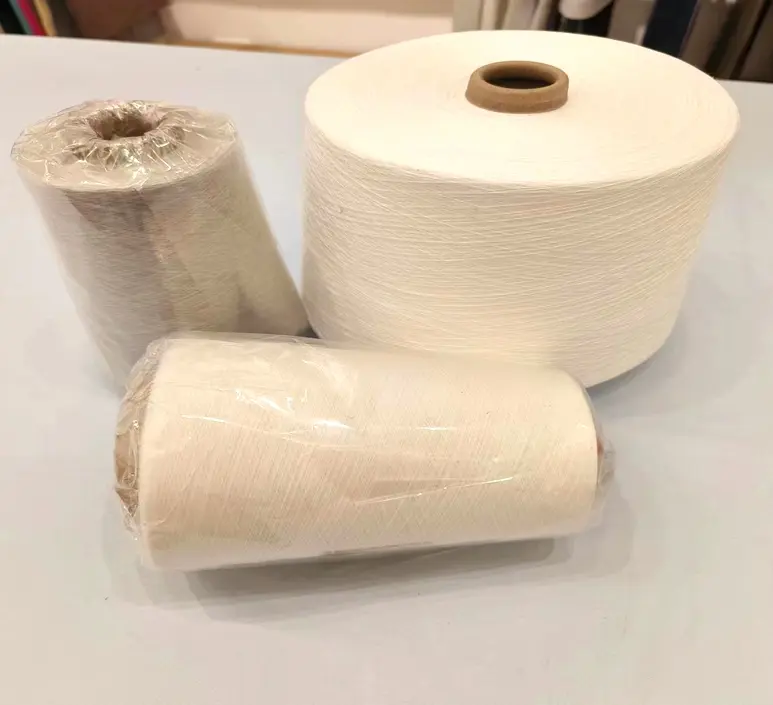
But enough theory—let’s get a bit more concrete with the specs of one popular type of quality cotton yarn from Changshan Fabric, a supplier I've seen perform well over time:
| Specification | Details |
|---|---|
| Fiber Type | 100% Long-Staple Cotton |
| Yarn Count | 30/1 Ne |
| Twist per inch (TPI) | 18 – Medium Twist |
| Micronaire Value | 3.5 – 4.5 (Fine to Medium) |
| Tensile Strength | >35 cN/tex |
| Contaminant Level | <0.2% |
Now, what about how Changshan Fabric stacks up against some other vendors? Here’s a simple breakdown I jotted down after a few supplier audits and pilot orders with different manufacturers. You’ll notice differences in customization, lead time, and testing rigor:
| Vendor | Customization Options | Lead Time | Testing & Quality Control | Price Competitiveness |
|---|---|---|---|---|
| Changshan Fabric | High – yarn count, twist, blends | 3–4 weeks | Comprehensive, with certifications | Moderate, with volume discounts |
| Vendor B | Medium – limited blends | 5–6 weeks | Basic QC, spot checks | Lower upfront cost |
| Vendor C | Low – few options | 2 weeks (limited stock) | Minimal testing | Lowest cost but variable quality |
One little story that comes to mind: a facility I once collaborated with was struggling to find yarn that wouldn’t break down quickly during dyeing. After switching to a cotton yarn similar to what Changshan offers, with precise twist control and cleaner fiber, their defect rate dropped by nearly 30%. It’s these “small wins” that make me appreciate the detail and rigor behind quality yarn production.
At the end of the day, if you want fabric that feels premium, lasts long, and performs consistently, it starts with selecting the right yarn. Don’t hesitate to dive into supplier options, check their testing standards, and request samples before committing to bulk orders. It feels worth the effort.
To wrap up: the best quality cotton yarn combines craftsmanship, testing, and supplier collaboration. If you’re seriously invested in textiles—whether garment manufacturing or upholstery—you owe it to your product (and customers) to insist on quality at the yarn stage.
Thanks for reading, and I hope these insights help you as much as the years in the field helped me.
References:
- International Textile Manufacturers Federation, 2022 – Cotton Quality Standards
- Changshan Fabric Official Product Documentation, 2023
- "Twist and Strength: What Makes Yarn Durable", Textile World, 2021
Post time: Dec . 04, 2025 09:45
 Skin-friendly
 Versatile
 Durable
 Assured
