THE BUYER'S GUIDE / SELECTION
Choosing Ring Spun Yarn: How to Match TR65/35 Ne20/1 to Your Fabric Application
Ring spun yarn is valued in professional textile buying for its tight fiber structure, smooth surface, and reliable strength. This guide explains the key selection criteria buyers should evaluate — fiber blend, yarn count, spinning method, and intended end use — and shows how the TR65/35 Ne20/1 ring spun yarn from Hebei Henghe Bangxing New Material Co., Ltd. addresses those criteria. It also introduces two complementary yarns from the same product range so procurement teams can match the right specification to their production requirements.

Fiber blend and composition — the polyester-to-viscose ratio determines the balance of durability, wrinkle resistance, softness, and moisture absorption, and must match the end-use fabric category.
Yarn count (Ne) and construction — the Ne count and single/ply designation set fabric weight, fineness, and tensile strength; medium-fine counts such as Ne20/1 suit outerwear and uniform weaving, while finer counts target shirting and high-thread-count constructions.
Spinning technology — ring spun, siro spun, and compact spun methods produce different evenness, hairiness, and imperfection profiles; buyers with strict Cvm% or neps targets should compare published test data across available variants.
End-use application fit — suiting and outerwear favor TR blends at medium-fine counts; underwear and bedding favor cotton-rich or CR blends; buyers must confirm the yarn specification is appropriate for their specific weaving, knitting, or sewing process.
What Is Ring Spun Yarn and Why Does It Matter for Buyers?
Ring spun yarn is produced through a continuous process of drafting, twisting, and winding fibers onto a bobbin. The result is a compact yarn with well-aligned fibers, a smooth surface, and consistent twist throughout its length. For buyers sourcing textile materials, the method of spinning has a direct effect on fabric hand feel, pilling resistance, tensile strength, and suitability for downstream processes such as dyeing and finishing.
Compared with open-end yarn, ring spun yarn generally offers:
- Smoother surface and reduced pilling — tighter fiber alignment leaves fewer loose fibers on the fabric face.
- Higher tensile strength — the compact structure resists daily wear and repeated washing.
- Better softness — fabrics made from ring spun yarn are typically softer against the skin, an important factor for shirts, uniforms, and premium knitwear.
- More consistent performance in weaving and knitting — reduced yarn breakage and a cleaner fabric surface suitable for dyeing.
These properties make ring spun yarn the preferred choice when buyers specify higher-end fabrics for export garments, where end-consumers prioritize comfort and appearance.
Key Selection Criteria for Ring Spun Yarn
Professional buyers should evaluate the following criteria before placing an order.
1. Fiber Blend and Composition
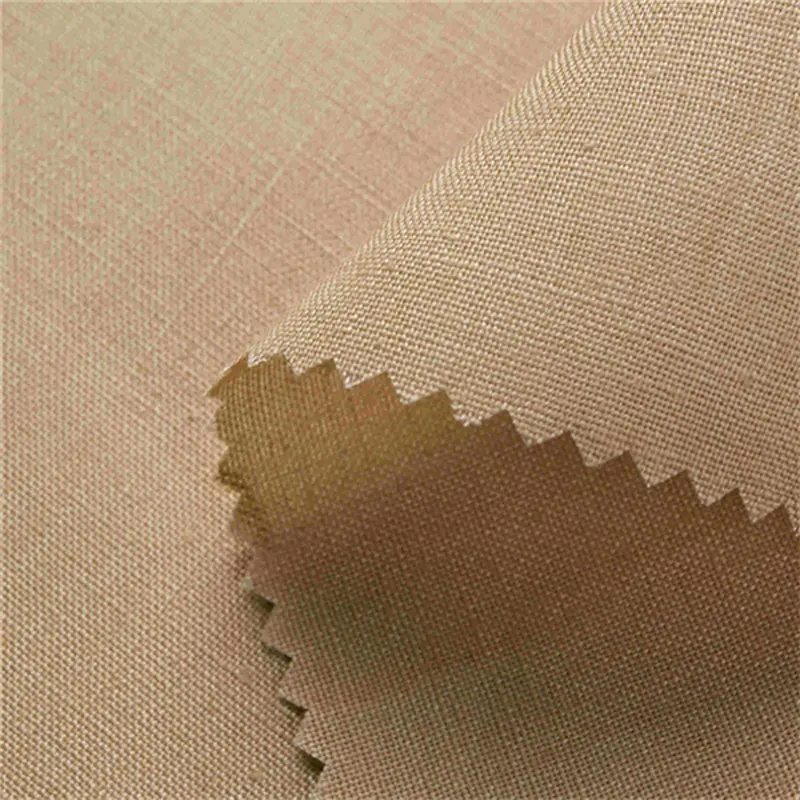
The fiber ratio in a blended ring spun yarn determines its balance of performance properties. A polyester–viscose (TR) blend captures the durability and wrinkle resistance of polyester alongside the softness and moisture absorption of viscose. This makes TR blends particularly suitable for woven suiting fabrics, uniform cloth, business-wear, and fashion garments where both appearance and wear comfort matter.
Buyers seeking purely natural-fiber softness may prefer a cotton–viscose (CR) blend, which delivers breathability and moisture-wicking properties suited to underwear, bedding, and knitwear applications.
2. Yarn Count (Ne)
Yarn count in the English metric system (Ne) indicates fineness: a higher Ne number means a finer, lighter yarn. The choice of count should correspond directly to the intended fabric construction:
| Count Range | Typical Application |
|---|---|
| Ne20/1 (medium-fine) | Woven outerwear, uniform fabric, knitted tops |
| Ne32/1–Ne32/2 (fine) | Dress shirts, lightweight suiting, fashion knitwear |
| Ne30/1–Ne60/1 | Underwear, bedding, socks, towels |
For most woven and knitted outerwear fabrics that need a balance of fabric weight and strength, a medium-fine count such as Ne20/1 is appropriate. Finer counts work better for lightweight or high-thread-count constructions.
3. Single Yarn vs. Ply Yarn
Single yarn (1) is used where fabric weight and cost efficiency matter. Ply yarn (e.g., Ne32/2) is produced by twisting two or more single yarns together, increasing strength and uniformity — a practical consideration for fabrics subjected to heavy mechanical stress or frequent washing cycles.
4. Spinning Technology: Ring, Siro, or Compact
Within the ring spinning category, manufacturers may offer standard ring spun, siro spun, or compact spun variants. Each produces slightly different surface characteristics and evenness levels. Buyers specifying fabrics with very low imperfection targets may wish to confirm which spinning technology is in use, as it affects Cvm%, thin places, thick places, neps, and hairiness values — parameters that are reported in product test data.
5. End-Use Application Fit
Not all ring spun yarns are interchangeable. The combination of fiber blend, count, and spinning method should match the final garment or fabric category:
- Suiting, uniform, and outerwear fabrics: TR blend, medium-fine count, weaving application.
- Premium knitwear and activewear: ring spun construction with controlled hairiness and pilling resistance.
- Bedding and intimate apparel: CR or cotton-rich blends with moisture management.
- Industrial or workwear end-uses: higher-strength ply constructions.
Product Spotlight: TR65/35 Ne20/1 Ring Spun Yarn
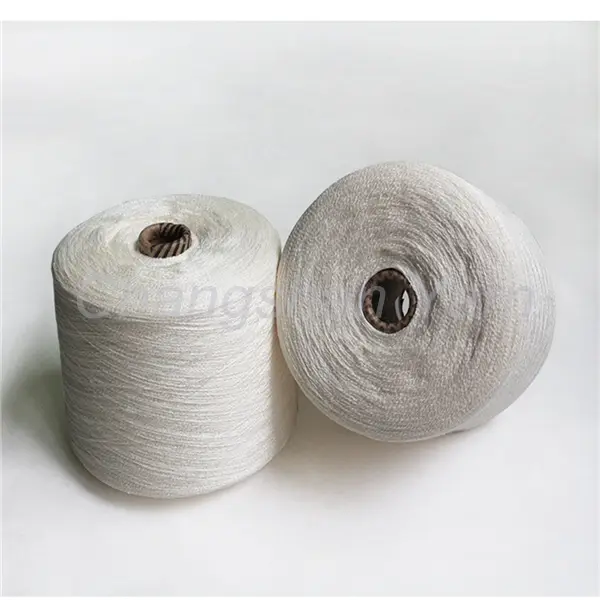
Hebei Henghe Bangxing New Material Co., Ltd. supplies the TR65/35 Ne20/1 ring spun yarn, a blended yarn composed of 65% polyester (Terylene) and 35% viscose. The specifications for this product are:
| Parameter | Value |
|---|---|
| Actual Count | Ne20/1 |
| Linear Density Deviation | ±1.5% |
| Cvm % | 10 |
| Thin (–50%) | 0 |
| Thick (+50%) | 10 |
| Neps (+200%) | 20 |
| Hairiness | 6.5 |
| Strength CN/tex | 26 |
| Strength CV% | 10 |
| Application | Weaving, knitting, sewing |
| Loading Weight | 20 Ton / 40″ HC |
The polyester component contributes durability and wrinkle resistance; the viscose component adds softness and moisture absorption. Together, they produce a yarn that handles well during weaving and knitting and yields fabrics suitable for versatile textile applications.
Who should consider this specification?
- Woven fabric mills producing uniform cloth, workwear, or casual outerwear that require a medium-weight yarn with consistent evenness.
- Knitting operations producing tops or outerwear where a balanced TR blend reduces pilling without sacrificing strength.
- Buyers sourcing fabric for markets in the US, Middle East, Europe, or Southeast Asia that specify polyester–viscose blends for their wrinkle-recovery and easy-care properties.
Who may need a different specification?
- Buyers targeting fine shirting or high-thread-count wovens should consider finer counts (Ne32s and above).
- Applications requiring natural-fiber moisture performance (underwear, intimate apparel, bedding) are generally better served by cotton–viscose blends.
- End-uses demanding very low hairiness or neps — such as technical fabrics or fine worsted-style cloths — should compare Cvm% and imperfection data across the available count range.
Complementary Yarns from the Same Range
Hebei Henghe Bangxing New Material Co., Ltd. also offers two other confirmed products that buyers may evaluate depending on their application:
TR Yarn – Ne32/2 Ring Spun Yarn (65% Polyester / 35% Viscose)
This ply yarn uses LENZING viscose and is published with tighter imperfection values (Cvm% 8.42, Thick +50% at 0.3, Neps +200% at 1, Strength CN/tex 27, Hairiness 8.02). The Ne32/2 construction is suited to fashion garments, dress suiting, and lighter-weight professional wear where a finer, stronger ply yarn is specified. Its lower imperfection counts relative to the Ne20/1 reflect the finer count and ply construction.
C/R Yarn (Cotton / Viscose Blend, Ne30/1–Ne60/1)
This range covers yarn counts from Ne30/1 to Ne60/1 and targets underwear, bedding, knitwear (gloves, socks, towels), and garment applications where natural-fiber comfort, breathability, and moisture management are the primary requirements. It is available in ring spun and compact spinning variants. MOQ and delivery parameters are published on the product page.
How to Narrow Your Specification Before Inquiring
Buyers can reduce back-and-forth with suppliers by confirming the following before contacting the manufacturer:
- Fiber blend required — TR (polyester/viscose), CR (cotton/viscose), or 100% cotton.
- Yarn count — specify Ne and whether single or ply construction is needed.
- Spinning method preference — ring spun, siro spun, or compact, if relevant to your quality standard.
- Application — weaving, knitting, or sewing; fabric end-use category.
- Volume and packaging — loading quantity (the TR65/35 Ne20/1 lists 20 Ton per 40″ HC) and preferred package format.
Packaging is available according to buyer request for the TR65/35 Ne20/1. Price, delivery schedule, and certification documentation are not included in the published product data and should be requested directly from Hebei Henghe Bangxing New Material Co., Ltd.
Summary
Ring spun yarn selection depends on fiber blend, yarn count, spinning technology, and the specific fabric application. For buyers in outerwear, uniform, and general apparel weaving who need a medium-fine, balanced TR blend, the TR65/35 Ne20/1 ring spun yarn from Hebei Henghe Bangxing New Material Co., Ltd. presents a documented specification with published evenness and strength data. Buyers with finer-count or natural-fiber requirements can evaluate the Ne32/2 TR yarn or the C/R cotton–viscose range from the same supplier. Always confirm current pricing, lead times, and certification requirements directly with the manufacturer before finalizing procurement decisions.
THE PEOPLE

About the author
THE COMPANY
Hebei Henghe Bangxing New Material Co., Ltd.
ShiJiaZhuang Changshan Textile which was restructured and established in December 1998 on the basis of the former Shijiazhuang mianyi-miansi with a history of more than 60 years, was listed on shenzhen stock exchange in July 2000.
After the acquisition of shijiazhuang five cotton, zhao spinning, two spinning machines and beiming software and other enterprises.
In August 2017, it was renamed as shijiazhuang changshan beiming technology co., LTD.…
YOUR NEXT STEP
Bring your brief. Start a useful conversation.
Use case, specification, quantity and delivery window: make the next conversation specific.
Post time: Oct . 28, 2026 03:26


 Skin-friendly
 Versatile
 Durable
 Assured

