THE BUYER'S GUIDE / SELECTION
100 Cotton Yarn Price: Choosing 100% Combed Cotton Yarn for Weaving — Material, Fit and Intended Use
Understanding 100 cotton yarn price starts with understanding what you are actually buying. This guide walks procurement teams and fabric buyers through the key selection criteria for 100% combed cotton weaving yarn — covering fiber origin, yarn construction, end-use fit, and the product specifications that distinguish one grade from another. Price decisions that ignore these criteria risk mismatches in fabric quality, loom performance, and downstream finishing. Hebei Henghe Bangxing New Material Co., Ltd. supplies a confirmed 100% combed cotton yarn for weaving based on 100% Xinjiang cotton, and this article explains how to evaluate whether it — or any comparable yarn — matches your project requirements.

Fiber origin and purity: The fiber source (e.g., Xinjiang cotton, Australian cotton) determines staple length, contamination level, and processing consistency — all of which affect final fabric quality and downstream reject rates. Buyers should confirm whether the fiber origin matches their end-product requirements, particularly for dyed, printed, or export-grade fabrics.
Yarn construction method: Combed vs. carded and compact vs. ring spinning are distinct cost and quality tiers. Combed compact construction removes short fibers, reduces hairiness, and increases tensile strength — directly affecting pilling resistance, dye uptake, and loom breakage rates. Buyers should verify construction method against their loom type, fabric specification, and acceptable quality level.
End-use fit and yarn count: The intended application (premium shirting, workwear, bedding, or technical weaving) determines the appropriate yarn count and performance profile. Finer counts suit lightweight apparel weaving; specific end uses such as medical gauze require bleached yarn rather than standard combed weaving yarn. Confirming end-use alignment before comparing prices prevents costly specification mismatches.
Contamination control and quality documentation: For export-quality or finished-fabric applications, contamination-controlled processing and available test reports (covering strength in cN, CVm%, thin/thick places, nep count) are baseline requirements. Buyers should request documented specifications rather than relying on grade labels alone when evaluating 100 cotton yarn price across suppliers.
Why 100 Cotton Yarn Price Alone Is Not Enough
When buyers search for 100 cotton yarn price, they are almost always working toward a fabric procurement decision: shirting, workwear, premium bedding, or technical woven goods. Price is a real constraint, but the value of a cotton weaving yarn is inseparable from its material composition, fiber origin, construction method, and performance consistency.
This guide explains the criteria that experienced buyers use to evaluate 100% cotton weaving yarn before requesting a quotation — and identifies the confirmed product from Hebei Henghe Bangxing New Material Co., Ltd. that meets the benchmark for combed, compact-spun weaving yarn.
What Is 100% Combed Cotton Yarn?
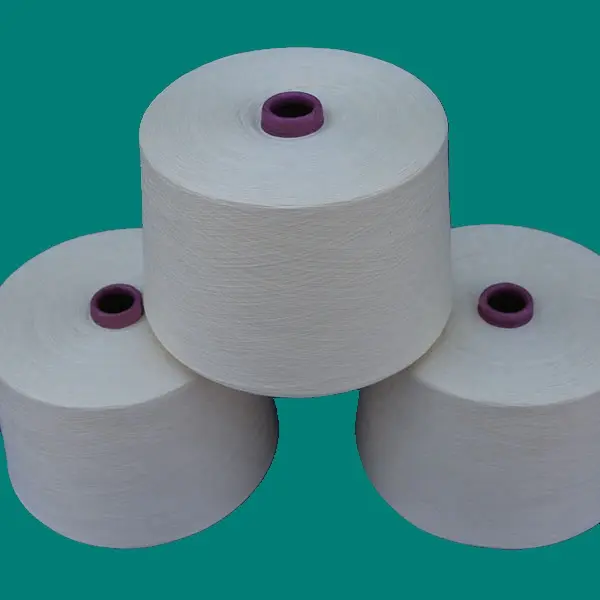
Combed cotton yarn is produced by running raw cotton through a combing process that removes short fibers and impurities, leaving only the longest, most uniform fibers. The result is a yarn that is smoother, stronger, and more consistent than carded cotton.
According to confirmed product specifications, 100% Combed Cotton Yarn for Weaving from Hebei Henghe Bangxing New Material Co., Ltd. is made from 100% Xinjiang cotton, processed under contamination-controlled conditions. Key technical parameters on record include:
- Average Strength: 184 cN
- Evenness (CVm): 12.55%
- Thin places (−50%): 3
- Thick places (+50%): 15
- Neps (+200%): 40
- Twist: 31.55 per inch
- Net weight per cone: 1.667 kg (at moisture percentage 8.4%)
- Packaging: 25 kg/bag or 30 kg/carton
These parameters reflect the kind of consistency that is critical for high-speed shuttle-less looms and for fabrics where visual uniformity and hand feel determine product grade.
Selection Criteria for 100% Cotton Weaving Yarn
1. Fiber Origin and Purity
Fiber origin directly affects yarn quality. Xinjiang cotton is widely recognized for its long staple length and naturally high fiber uniformity. The confirmed product uses 100% Xinjiang cotton, contamination controlled — a specification relevant to buyers producing dyed or printed fabrics, where fiber contamination causes visible defects and rejects.
For buyers considering alternative origins, confirmed materials also document yarns made from 100% Australian cotton (available in 80S combed compact specification), also used for weaving. Australian cotton is noted for long staple, low lint, and processing stability that reduces loom breakage rates. Fiber origin is a genuine cost driver: longer staple, lower contamination, and traceable sourcing typically correspond to higher yarn cost but lower downstream waste.
2. Yarn Construction: Combed vs. Carded, Ring vs. Compact
Combed cotton yarn costs more to produce than carded because the combing step removes up to 15–20% of input fiber. That material cost difference is real and is reflected in 100 cotton yarn price. However, the benefits are measurable:
- Fewer surface fibers (lower hairiness) means reduced pilling in finished fabric
- Tighter, more uniform structure means better dye penetration and color consistency
- Higher tensile strength reduces yarn breakage on the loom, lowering production downtime
The confirmed product uses compact spinning (combed compact construction), which further consolidates fibers compared to conventional ring spinning. Compact-spun yarns have lower hairiness, higher strength, and better abrasion resistance — advantages that justify their position in premium shirting, dress materials, and workwear.
3. Intended End Use
Not all weaving applications need the same yarn specification. The confirmed materials identify the following end-use matches:
| End Use | Why Combed Cotton Is Suitable |
|---|---|
| Premium shirting and dress materials | Fine surface, uniform weave, superior dye absorption |
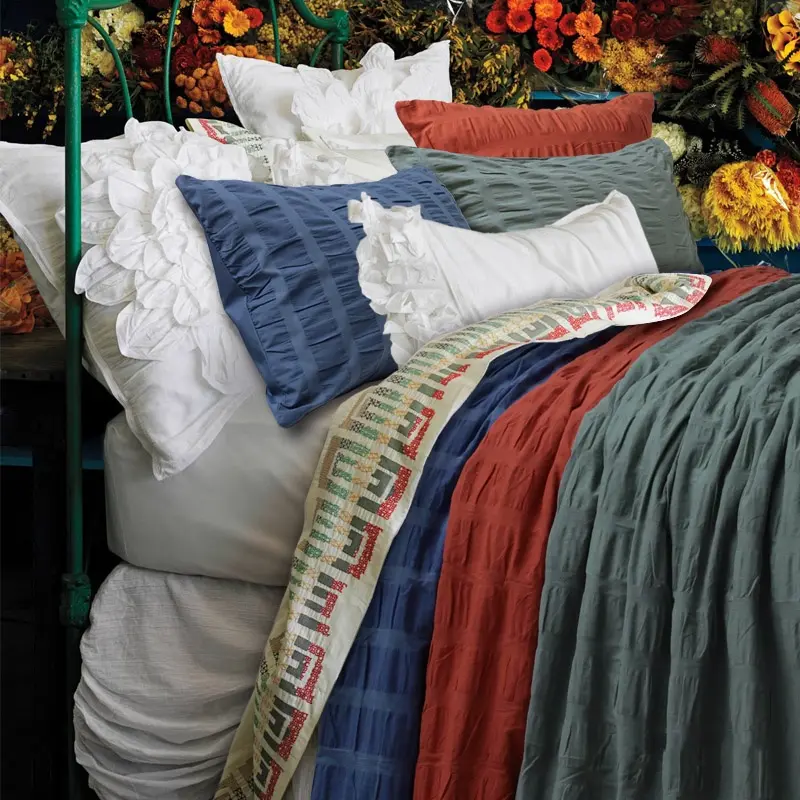
| Luxury linens and bedding | Softness, pilling resistance, dimensional stability |
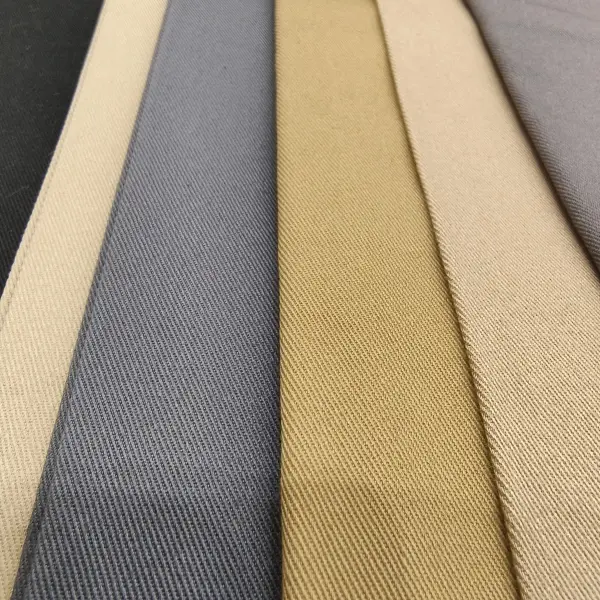
| Workwear and uniforms | Abrasion resistance, moisture absorption, shape retention after laundering |
| Technical woven fabrics | Tensile strength, evenness, consistent twist |
For medical gauze applications, a separate 100% Cotton Bleached Yarn (Ne30/1 to Ne60/1) is bleached to remove impurities for sterile contact. That product is distinct from the combed weaving yarn and serves a different purchase requirement.
4. Yarn Count and Packaging Format
Yarn count (Ne) determines the fineness and weight of the resulting fabric. Buyers should confirm the yarn count matches their loom specification and target fabric weight before comparing prices across suppliers. Packaging format — cone weight, bag, or carton — also affects landed cost, especially for containerized import orders.
The confirmed combed cotton weaving yarn is packaged at 1.667 kg/cone, 25 kg/bag, or 30 kg/carton. Buyers with specific reel or cone weight requirements should verify compatibility with their handling equipment.
5. Contamination Control
For light-colored or finished fabrics, contamination-controlled yarn is not optional — it is a baseline quality requirement. The confirmed product specification explicitly notes contamination-controlled processing, which is particularly important when sourcing from long-staple origins like Xinjiang.
Comparing 100% Cotton Yarn Types for Weaving
Hebei Henghe Bangxing New Material Co., Ltd.'s confirmed product range includes several distinct 100% cotton and blended yarn options. For buyers evaluating weaving applications specifically:
100% Combed Cotton Yarn for Weaving (Xinjiang cotton)
Strength: 184 cN | CVm: 12.55% | End use: woven fabric. Best fit for premium apparel weaving, workwear, and performance shirting where fiber uniformity and surface quality matter.
100% Australian Cotton Yarn (80S combed compact)
End use: weaving. Best fit for buyers who require extra-long staple fiber, low lint, and GOTS-compatible sourcing for organic or natural-label garments. Confirmed to be contamination-free and suitable for bleaching.
100% Cotton Bleached Yarn (Ne30/1–Ne60/1)
End use: medical gauze. This is a different product serving a different application. Not a weaving yarn for apparel.
C/R Yarn (Cotton/Viscose, Ne30/1–Ne60/1)
End use: underwear, bedding, knitting. Not a 100% cotton product and not a weaving yarn in the same sense — included here for reference because buyers sometimes compare it against all-cotton options for bedding applications.
What Affects 100 Cotton Yarn Price in Practice
The technical specifications point to the cost drivers buyers should expect:
- Fiber origin and staple length — Xinjiang long-staple and Australian ELS cottons cost more than short-staple alternatives but deliver measurable quality benefits
- Combing waste — Combed yarn removes more input fiber than carded, raising cost per kilogram of finished yarn
- Spinning method — Compact spinning adds equipment cost versus conventional ring spinning
- Contamination control — Processing discipline for clean yarn adds overhead, especially relevant for export-quality orders
- Order volume — Packaging configurations (25 kg bag, 30 kg carton) and minimum order quantities affect per-unit economics for smaller buyers
- Yarn count — Finer counts (higher Ne) require more processing and typically carry higher per-kg cost
Buyers comparing 100 cotton yarn price across suppliers are advised to request test reports covering strength (cN), CVm%, thin/thick places, and nep count — the same parameters confirmed in the product specification above — rather than relying on price alone as a quality proxy.
When 100% Combed Cotton Weaving Yarn Is the Right Choice
Based on the confirmed product materials, 100% combed cotton yarn for weaving is the appropriate selection when:
- The end product requires a fine, smooth fabric surface with low pilling risk
- Fabric will be piece-dyed or printed and color uniformity is critical
- Workwear or professional garments must withstand frequent industrial laundering
- The buyer needs traceable, contamination-controlled fiber for export or brand compliance
- Loom efficiency and reduced breakage rates are operational priorities
It is not the right choice when cost is the only driver and fabric quality requirements are minimal, when blended performance (stretch, moisture management) is needed, or when the end use is specifically medical or specialty technical.
Summary
Evaluating 100 cotton yarn price is a purchase decision, not just a cost lookup. The confirmed 100% Combed Cotton Yarn for Weaving from Hebei Henghe Bangxing New Material Co., Ltd. — made from 100% Xinjiang cotton with documented strength of 184 cN and CVm of 12.55% — represents a clearly specified benchmark for premium weaving applications. Buyers should use the criteria in this guide to compare specifications, request samples with test reports, and align yarn grade with the actual requirements of their fabric and end product.
THE PEOPLE

About the author
THE COMPANY
Hebei Henghe Bangxing New Material Co., Ltd.
ShiJiaZhuang Changshan Textile which was restructured and established in December 1998 on the basis of the former Shijiazhuang mianyi-miansi with a history of more than 60 years, was listed on shenzhen stock exchange in July 2000.
After the acquisition of shijiazhuang five cotton, zhao spinning, two spinning machines and beiming software and other enterprises.
In August 2017, it was renamed as shijiazhuang changshan beiming technology co., LTD.…
YOUR NEXT STEP
Bring your brief. Start a useful conversation.
Use case, specification, quantity and delivery window: make the next conversation specific.
Post time: Oct . 28, 2026 03:26



 Skin-friendly
 Versatile
 Durable
 Assured

