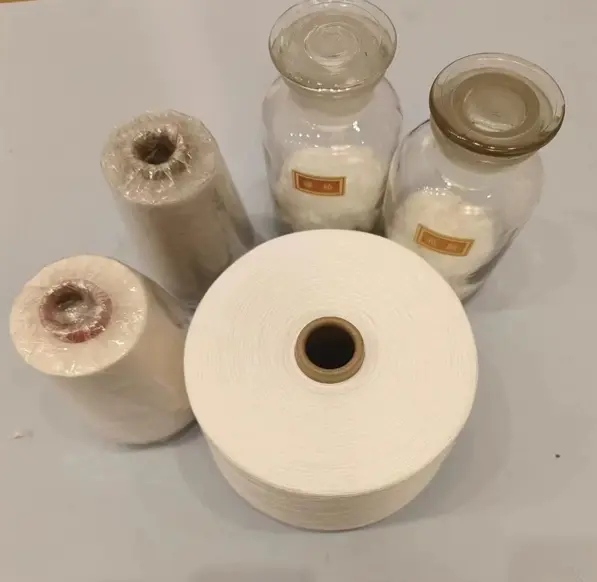
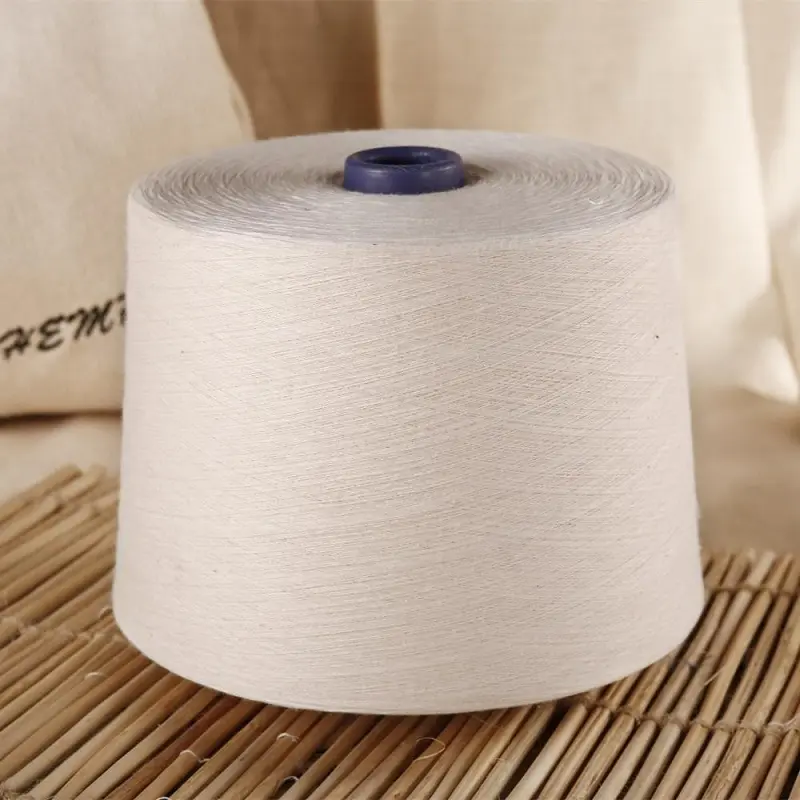
Choose organic cotton yarn by fiber content, spinning method, count, and intended use. Our range covers open-end, ring-spun, and combed compact constructions, including NE 50/1 and NE 60/1 options for finer textile requirements.

Set the fiber requirement first
Start the purchase specification with the fiber content and the environmental requirement. Our range includes 100% cotton and 100% organic cotton, with eco-friendly and recycled characteristics. GOTS certification is also part of the product offering for buyers whose textile program requires an organic certification basis.
Fiber content does not determine the yarn count or spinning method. Those details need their own lines in the inquiry so the yarn can be matched to the fabric or knitted article.
Match the count to the construction
Yarn count is the main fit check after fiber content. Open-end, ring-spun, and combed compact options cover different count requirements. The count and construction should match your fabric density, machine settings, and finished textile specification.
| Spinning construction | Available counts | Suitable purchasing situation |
|---|---|---|
| Open-end | NE 6, NE 7, NE 8, NE 10, NE 12, NE 16 | Choose for a specification requiring one of these open-end counts. |
| Ring-spun | NE 16, NE 20, NE 21, NE 30, NE 32, NE 40 | Choose when the textile process requires ring-spun construction in one of these counts. |
| Combed compact | NE 50, NE 60, NE 80, NE 100, NE 120, NE 140 | Choose for finer count requirements, including NE 50/1 and NE 60/1. |
NE 50/1 and NE 60/1 combed compact yarn are the focused choices for finer weaving and knitting requirements. For coarser specifications, select the required count from the open-end or ring-spun options instead of identifying the material only as organic cotton yarn.
Choose the spinning method deliberately
The same organic cotton requirement can lead to different yarn choices because construction changes with the spinning method. State open-end, ring-spun, or combed compact in the purchase request, then add the required count.
NE 16 appears in both the open-end and ring-spun ranges. A request for NE 16 should therefore include the construction as well as the count. This small distinction matters when several counts are being sourced for one textile program.
Combed compact construction is the suitable route for the finer NE 50/1 and NE 60/1 options. Open-end and ring-spun constructions suit buyers working within their respective listed count ranges.
Align the yarn with the finished textile
Use should guide the final choice. The product range covers industrial weaving and knitting applications, so the finished textile and its required count should be named together. A finer fabric or knitted article can point to NE 50/1 or NE 60/1 combed compact yarn. A program built around NE 6 through NE 16 can point to open-end yarn, while NE 20 through NE 40 requirements fit the listed ring-spun choices.
For a multi-count program, separate each line by construction and count. This keeps NE 16 open-end and NE 16 ring-spun as distinct purchase requirements and allows the production team to evaluate each yarn against its intended textile.
Include quality and environmental requirements
Organic cotton yarn can carry more than a fiber description in a purchasing specification. Add the required certification and the quality checks that matter to your textile program. Our product offering includes GOTS certification and a fully equipped textile lab for comprehensive mechanical and chemical property testing according to AATCC, ASTM, and ISO.
These requirements belong beside the count, construction, and application. They help keep a bulk or wholesale inquiry precise when several organic cotton yarn options are being considered.
What to weigh
Your shortlist
Prepare a precise yarn specification
A clear request identifies the material, spinning construction, count, and finished use in one place. For finer weaving or knitting, our organic cotton yarn with NE 50/1 or NE 60/1 combed compact construction is the direct fit. Open-end and ring-spun options suit buyers whose specifications fall within those count ranges.
Send us the target count, construction, and intended textile application for a focused quotation.

About the author
The company
Hebei Henghe Bangxing New Material Co., Ltd.
ShiJiaZhuang Changshan Textile which was restructured and established in December 1998 on the basis of the former Shijiazhuang mianyi-miansi with a history of more than 60 years, was listed on shenzhen stock exchange in July 2000.
After the acquisition of shijiazhuang five cotton, zhao spinning, two spinning machines and beiming software and other enterprises.
In August 2017, it was renamed as shijiazhuang changshan beiming technology co., LTD.…
Post time: Nov . 16, 2026 02:04



 Skin-friendly
 Versatile
 Durable
 Assured

